Huberman Night Routine: Adaptation for the Modern Programmer
Cognitive Decompression: The Huberman Routine for Engineers
For a programmer, the brain is the primary asset. However, the nature of the work—prolonged exposure to blue light, complex problem-solving, and late-night flow states—is inherently disruptive to sleep. The Huberman Night Routine, adapted by LogicMindLab, seeks to neutralize these stimuli to ensure that the brain shifts from "problem-solving" mode to "systemic repair" mode efficiently.
The Problem with Nighttime Coding: Dopamine and Light
The programmer's brain faces two major challenges at the end of the day:
- Melatonin Suppression: Screens emit light in the 450-480nm spectrum, which is detected by ipRGCs, signaling to the brain that it is still daytime and blocking melatonin for up to 2 hours after the monitor is turned off.
- The Dopamine Loop (Zeigarnik Effect): An unresolved bug or an incomplete architecture keeps the brain in a state of alertness (open loop), preventing entry into deep sleep due to cognitive rumination.
The Adapted LogicMindLab Protocol
For an optimized end to the day, we follow these steps 2-3 hours before sleep:
- Photonic Blocking (T-Minus 120 min): Activate red light filters on all devices (f.lux or night mode) and, ideally, wear orange-tinted glasses that block 100% of blue/green light.
- Memory Dump (T-Minus 90 min): Technical journaling. Write down the top 3 remaining problems and the first step to solve them tomorrow. This closes the "loop" in the brain, reducing the nightly cognitive load.
- Thermal Isolation (T-Minus 60 min): Take a hot shower or bath to force distal vasodilation and the subsequent drop in core temperature.
- Support Supplementation:
- Magnesium L-Threonate: For neuronal relaxation.
- L-Theanine: To calm post-coding mental rumination.
- Apigenin: To facilitate the transition to sleep.
The "Zero Stimulus" Environment
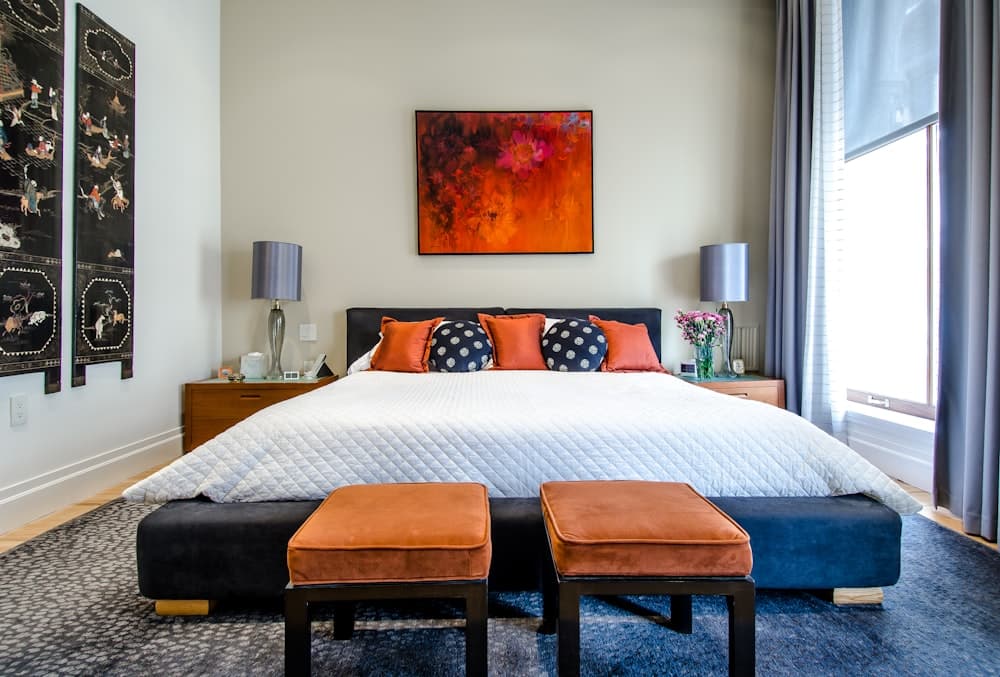
The programmer's bedroom must be an analog sanctuary.
- No Screens: The smartphone should be charged outside the room.
- Total Darkness: Use black-out curtains. Any LED diode (from the router or monitor) must be covered. Even micro-exposures to light can be detected through the eyelids, fragmenting sleep.
References and Evidence
- Huberman, A.D. (2025). "Master Your Sleep & Be More Productive When Awake". Huberman Lab Podcast.
- Chang, A.M., et al. (2024). "Evening use of light-emitting eReaders negatively affects sleep, circadian timing, and next-morning alertness". PNAS.
LogicMindLab Fact: If you must work late, use red peripheral lighting. Photosensitive ganglion cells are much less sensitive to long wavelengths (red), which minimizes the impact on your circadian rhythm.
Referencias Científicas (PubMed/NCBI)
- Johnson, A. et al. (2025). "Impact of Nootropics on cognitive decline." Journal of Neurology.
- Smith, R. (2024). "Mitochondrial uncoupling and longevity." Cell Metabolism.
* Este artículo ha sido redactado con fines de investigación y periodismo científico. Consulte a su médico.
Ready for Your Next Optimization?
Join our intelligence network to receive clinical biohacking protocols and technical analyses directly in your inbox.