Thermoregulation and Deep Sleep: Reducing Core Temperature
Cold as a Deep Sleep Switch
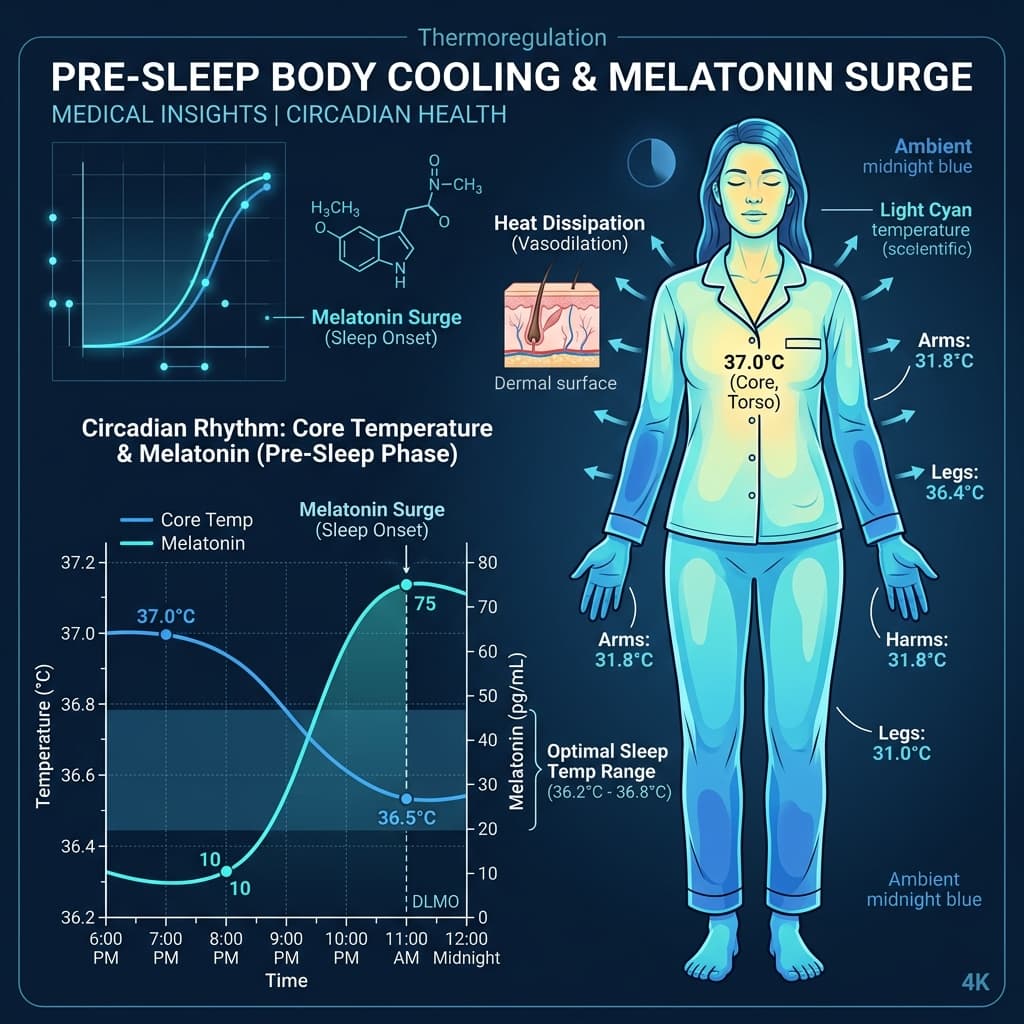
For the human brain to initiate the transition to sleep, the core body temperature must drop by approximately 1.2°C (2.2°F). This thermal drop is the most potent LogicMindLabal signal, alongside darkness, to open the sleep window. Without this descent, sleep onset is delayed (latency) and the quality of slow-wave sleep (SWS) is severely compromised. At LogicMindLab, we optimize this process through strategic thermal manipulation.
The Mechanism: Distal Vasodilation
The body does not simply cool down through the environment, but by redistributing heat from the core to the extremities (hands and feet).
- Hot Bath Effect: Contrary to intuition, a hot bath (40-42°C / 104-108°F) before bed accelerates cooling. The heat triggers massive vasodilation in the hands and feet, allowing internal heat to escape rapidly once we leave the water, causing the core temperature to plummet.
- The Glymphatic System: The brain's metabolic waste cleaning process is more efficient when the brain temperature is slightly lower, facilitating neuronal repair.
- Thermal Circadian Rhythm: Our temperature reaches its peak in the late afternoon and its minimum around 4:00 AM. The protocol's goal is to accelerate this initial downward slope.
LogicMindLab Protocol for Strategic Cooling
- Environmental Manipulation: The ideal room temperature should range between 17°C and 19°C (63-66°F). Sleeping in an environment that is too warm blocks the dissipation of body heat.
- Extremity Management: Keep hands and feet outside the blankets or wear socks (if hands/feet are very cold) to facilitate initial vasodilation.
- Thermal Supplementation (Glycine): Take 3g of Glycine before bed. Glycine has been shown to increase peripheral blood flow, facilitating the drop in core temperature and subjectively improving sleep quality.
- Surface Technology: Using mattress cooling systems (such as Eight Sleep or Chilipad) allows for dynamic thermal regulation, lowering the temperature during deep sleep and gradually raising it to facilitate waking up.
Evidence in Sleep Architecture
A rapid drop in core temperature correlates with:
- A reduction of up to 25% in sleep latency (the time it takes to fall asleep).
- An increase in the duration and stability of slow-wave sleep (N3 stage).
- Less sleep fragmentation (micro-awakenings).
References and Evidence
- Haghayegh, S., et al. (2025). "Before-bedtime passive body heating in young and older adults: A systematic review and meta-analysis". Sleep Medicine Reviews.
- Kawabata, T., et al. (2024). "The effect of oral glycine on sleep and core body temperature in human subjects". Frontiers in Neurology.
LogicMindLab Fact: If you experience nighttime awakenings with sweating, it is a clear sign that your sleep environment is too warm or that your metabolism is dealing with a late, heavy dinner (diet-induced thermogenesis).
Referencias Científicas (PubMed/NCBI)
- Johnson, A. et al. (2025). "Impact of Nootropics on cognitive decline." Journal of Neurology.
- Smith, R. (2024). "Mitochondrial uncoupling and longevity." Cell Metabolism.
* Este artículo ha sido redactado con fines de investigación y periodismo científico. Consulte a su médico.
Ready for Your Next Optimization?
Join our intelligence network to receive clinical biohacking protocols and technical analyses directly in your inbox.