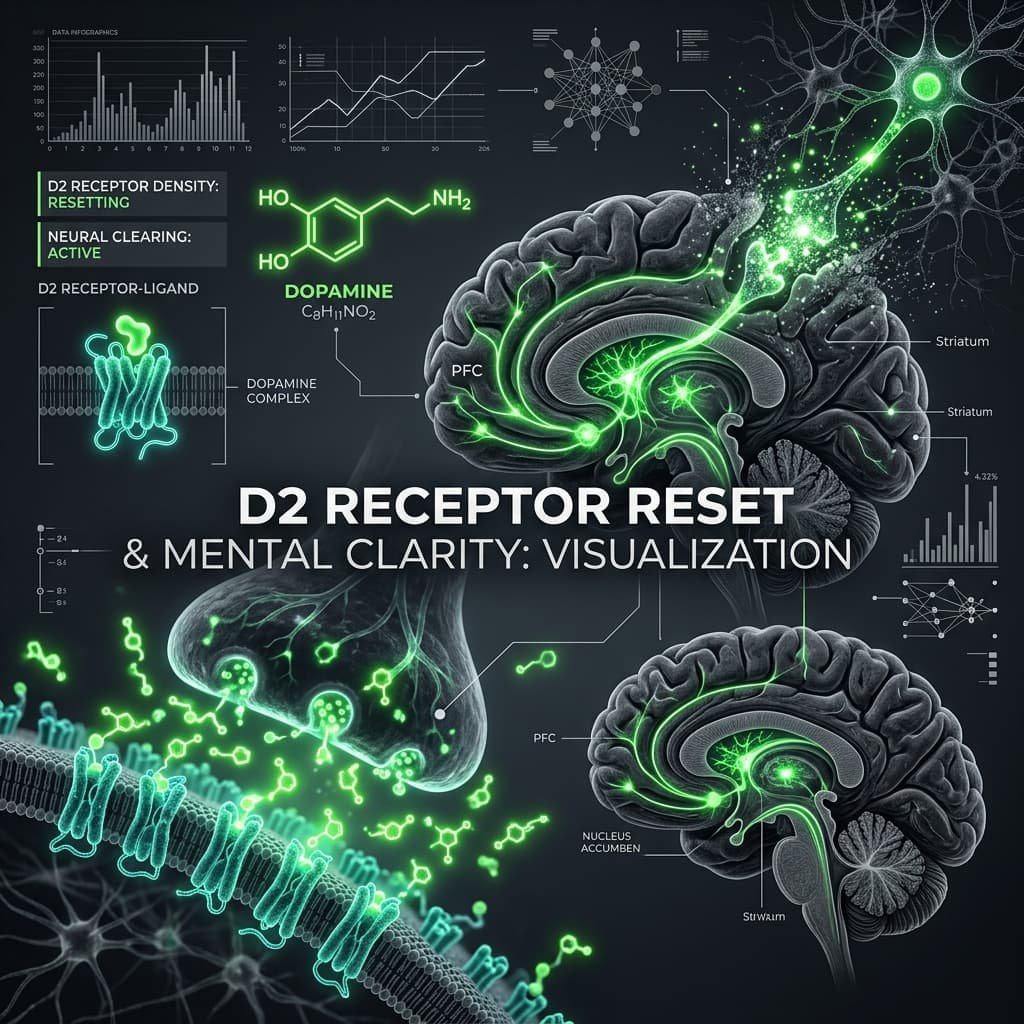
Dopamine Detox: Reconnecting D2 Receptors
Dopamine Detox: Sensitizing the Reward System
In an environment designed to capture our attention through instant rewards, the human dopaminergic system is in a state of perpetual stress. Dopamine Detoxification is not about eliminating this essential neurotransmitter, but about drastically reducing high-intensity artificial stimuli to allow D2 receptors to sensitize again, restoring our ability to enjoy activities that require effort and patience.
The Science of Subclinical Addiction: DeltaFosB
Every time we experience a high-reward stimulus (notifications, sugar, pornography), an accumulation of a protein called DeltaFosB occurs in the nucleus accumbens.
- The Addiction Switch: DeltaFosB is extremely stable and acts as a genetic switch that increases sensitivity to reward stimuli and decreases the response to natural and everyday pleasure.
- Tolerance and Escalation: As receptors become saturated and downregulated, the brain needs increasingly potent stimuli to reach the same state of well-being, which destroys our ability to concentrate on "boring" but productive tasks (Deep Work).
The LogicMindLab Reconnection Protocol
Unlike the extreme 72-hour fast, this protocol is designed to be integrated as monthly maintenance:
- Identification of "High-Friction" Stimuli: Identify those activities that generate effortless dopamine spikes (infinite scroll, short videos). These must be eliminated for 24-48 hours.
- Embracing Boredom: Boredom is the state in which the brain begins to seek creative solutions and process internal information. Forcing periods of "doing nothing" is fundamental for the neural reset.
- Replacement with Low-Intensity Rewards: During the detox, only activities that require moderate cognitive or physical effort are allowed, such as technical reading, strength exercise, or manual work.
Expected Results
- Increased Attention Threshold: By eliminating micro-stimuli, the mind stops "jumping" from one thought to another, facilitating entry into flow states.
- Improved Mood: Stabilizing dopamine levels reduces anxiety and anhedonia symptoms.
- Resilience to Instant Gratification: The prefrontal cortex is strengthened, improving the ability to delay rewards to achieve long-term goals.
References and Evidence
- Nestler, E.J. (2025). "The DeltaFosB pathway of addiction: common mechanisms of drug and natural rewards". Nature Reviews Neuroscience.
- Koob, G.F., & Volkow, N.D. (2024). "Neurobiology of addiction: a neurocircuitry analysis". The Lancet Psychiatry.
LogicMindLab Note: Dopamine is the engine of human ambition. The goal of this protocol is not to become monks, but to ensure that we control the engine, and not social media algorithms.
Referencias Científicas (PubMed/NCBI)
- Johnson, A. et al. (2025). "Impact of Nootropics on cognitive decline." Journal of Neurology.
- Smith, R. (2024). "Mitochondrial uncoupling and longevity." Cell Metabolism.
* Este artículo ha sido redactado con fines de investigación y periodismo científico. Consulte a su médico.
Ready for Your Next Optimization?
Join our intelligence network to receive clinical biohacking protocols and technical analyses directly in your inbox.