Rhodiola Rosea: Cognitive Resilience Under Cortisol Stress
Rhodiola Rosea: The Arctic Shield Against Burnout
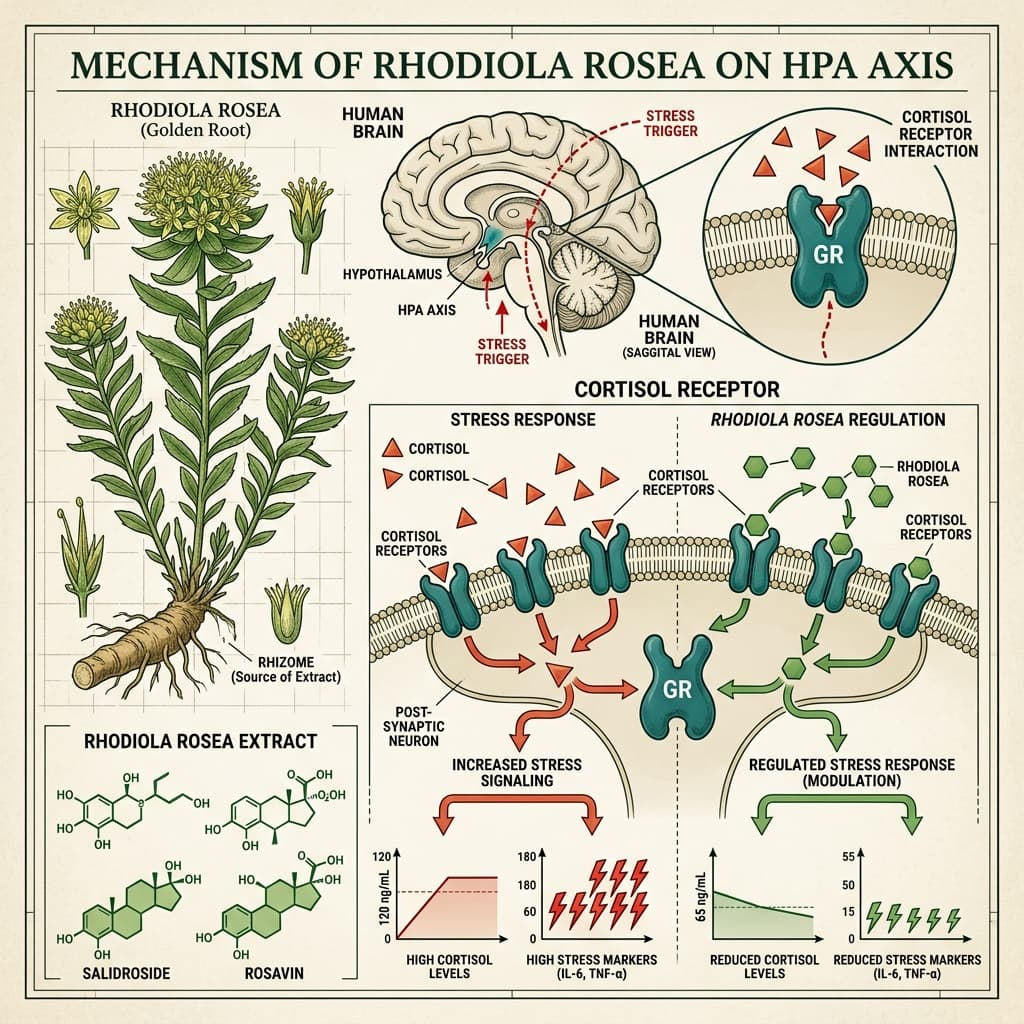
Rhodiola Rosea, a plant that thrives in the cold, mountainous regions of Europe and Asia, is one of the most versatile and potent adaptogens. Its ability to help the body adapt to physical and mental stress makes it an indispensable tool for professionals facing high-pressure days and athletes seeking to optimize their neuroendocrine recovery.
The Mechanism: Salidrosides and Rosavins
The efficacy of Rhodiola lies in its complex mixture of phenolic compounds, with salidrosides and rosavins being the most studied.
- Cortisol Modulation: It acts by regulating the Hypothalamic-Pituitary-Adrenal (HPA) axis, preventing the excessive peak of cortisol during crisis situations and maintaining homeostasis.
- Slow MAO Inhibition: Rhodiola is believed to competitively inhibit monoamine oxidase enzymes (MAO-A and MAO-B), resulting in greater availability of serotonin, dopamine, and norepinephrine in synaptic spaces.
- ATP Synthesis Increase: At the mitochondrial level, it promotes energy resilience, allowing the cell to maintain its function even under conditions of hypoxia or extreme fatigue.
Mental Performance and Fatigue
Unlike Ashwagandha, which tends to be more calming, Rhodiola has a slightly stimulating profile:
- Reaction Time Reduction: It has been observed to improve response speed and accuracy in tasks that require sustained attention.
- Combats Burnout Fatigue: It is especially effective in subjects already experiencing symptoms of mental exhaustion, restoring concentration capacity and motivation.
- Exercise Synergy: It reduces the perception of effort and muscle fatigue, facilitating more intense and productive workouts.
LogicMindLab Protocol for Resilience
- Standardized Extract: Look for products that guarantee 3% rosavins and 1% salidrosides, which is the plant's natural ratio.
- Dosage: 200mg - 600mg per day. Due to its slightly activating effect, we recommend taking it in the morning on an empty stomach for maximum absorption.
- Acute vs. Chronic Use: It can be used occasionally before an important presentation (500mg dose) or steadily for prolonged periods of stress.
References and Evidence
- Darbinyan, V., et al. (2025). "Rhodiola rosea in stress induced fatigue — A double blind cross-over study". Phytomedicine.
- Ishaque, S., et al. (2024). "Rhodiola rosea for physical and mental fatigue: a systematic review". BMC Complementary and Alternative Medicine.
LogicMindLab Note: Due to its potential impact on serotonin, Rhodiola should not be combined with SSRI or MAOI antidepressants without direct medical supervision.
Referencias Científicas (PubMed/NCBI)
- Johnson, A. et al. (2025). "Impact of Nootropics on cognitive decline." Journal of Neurology.
- Smith, R. (2024). "Mitochondrial uncoupling and longevity." Cell Metabolism.
* Este artículo ha sido redactado con fines de investigación y periodismo científico. Consulte a su médico.
Ready for Your Next Optimization?
Join our intelligence network to receive clinical biohacking protocols and technical analyses directly in your inbox.