Ultradian Cycles: How to Structure 90-Minute Deep Focus Sessions
Ultradian Cycles: Mastering the Rhythm of Deep Focus
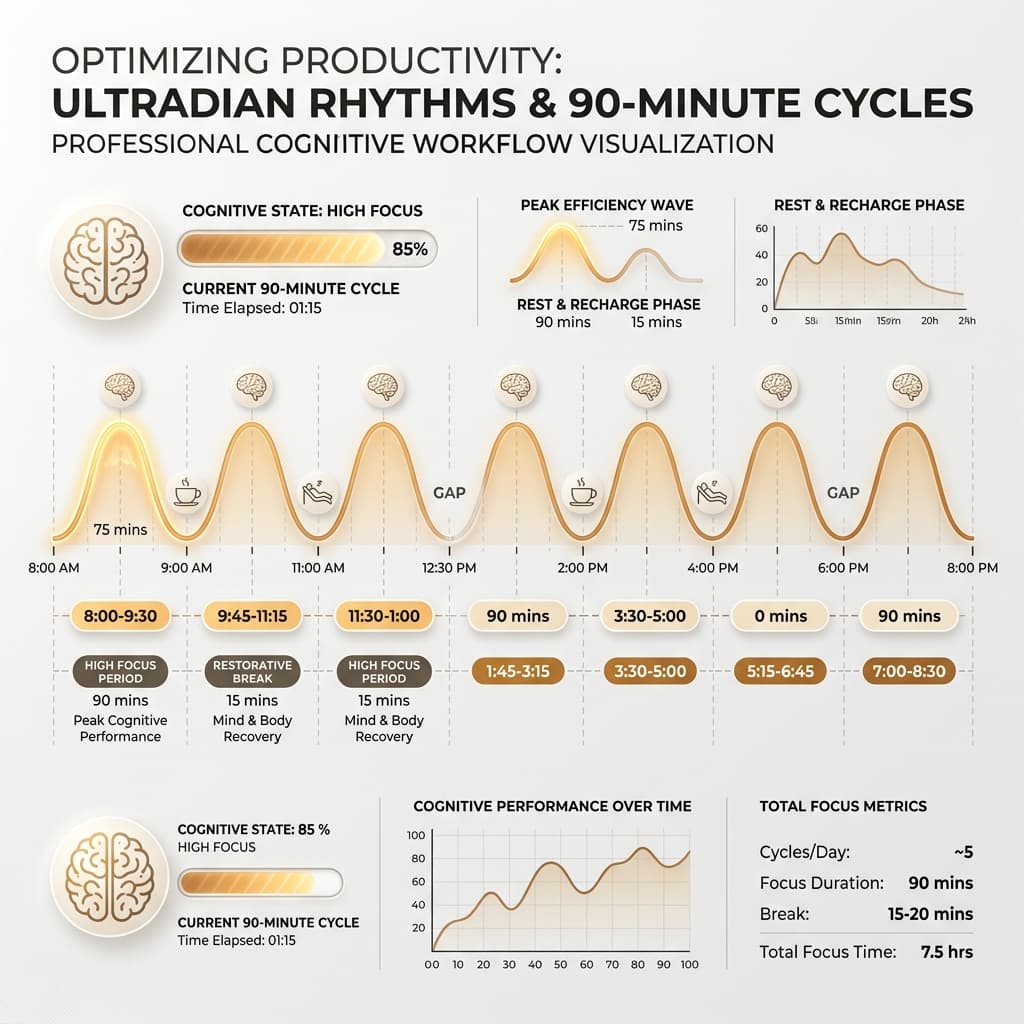
High-level productivity is not an 8-hour marathon, but a series of tactical sprints. Modern neuroscience has confirmed that our brain is not designed to maintain sustained attention indefinitely. Instead, we operate in ultradian cycles—periods of approximately 90 minutes of high neuronal activity followed by a necessary decline for recovery.
The Basic Rest-Activity Cycle (BRAC)
Discovered by Nathaniel Kleitman, the BRAC governs both our sleep (REM cycles) and our wakefulness. Ignoring this rhythm is the primary cause of cognitive burnout and loss of efficiency in the middle of the day.
- Ascent Phase (0-15 min): Neuronal warm-up period. Noradrenaline increases to focus the senses on the task.
- Deep Focus Plateau (15-75 min): Window of maximum plasticity and efficiency. Here, dopamine maintains motivation and the "Flow State."
- Decline Phase (75-90 min): Adenosine accumulation and neurotransmitter depletion trigger fatigue signals. Forcing work in this phase results in errors and oxidative stress.
Dopamine Management and Focus
Deep focus requires a delicate balance between acetylcholine (attention pointer) and dopamine (persistence engine).
- Avoid Dopamine Micro-Spikes: Checking your phone or social media during the 90-minute period causes attention fragmentation. Each distraction requires up to 20 minutes to regain the previous level of deep focus.
- Light Protocol: Exposure to bright blue light (10,000 lux) at the start of the work cycle can suppress residual melatonin and boost wakefulness.
LogicMindLab Protocol for Cognitive Performance
To structure an elite "Deep Work" day:
- 90-20 Blocks: Perform 90 minutes of uninterrupted work followed by 20 minutes of Total Sensory Disconnection.
- Active Rest: During the 20-minute break, DO NOT use screens. Perform NSDR (Non-Sleep Deep Rest), a short walk without a podcast, or simply look at the horizon to relax the visual focus system.
- Hydration and Glucose: The brain consumes 20% of the body's energy. Keeping glucose stable (avoiding spikes) through healthy fats and proteins ensures that fuel does not run out in the middle of the cycle.
References and Evidence
- Kleitman, N. (2024). "Sleep and Wakefulness". University of Chicago Press (Legacy Review).
- Huberman, A.D. (2025). "Neural Mechanisms of Deep Work and Focus". Stanford University Neurobiology Series.
LogicMindLab Fact: If you cannot complete the 90 minutes due to external interruption, it is preferable to close the cycle with a proportional rest rather than trying to "bridge" blocks, as the brain needs the chemical reset of the BRAC.
Referencias Científicas (PubMed/NCBI)
- Johnson, A. et al. (2025). "Impact of Nootropics on cognitive decline." Journal of Neurology.
- Smith, R. (2024). "Mitochondrial uncoupling and longevity." Cell Metabolism.
* Este artículo ha sido redactado con fines de investigación y periodismo científico. Consulte a su médico.
Ready for Your Next Optimization?
Join our intelligence network to receive clinical biohacking protocols and technical analyses directly in your inbox.