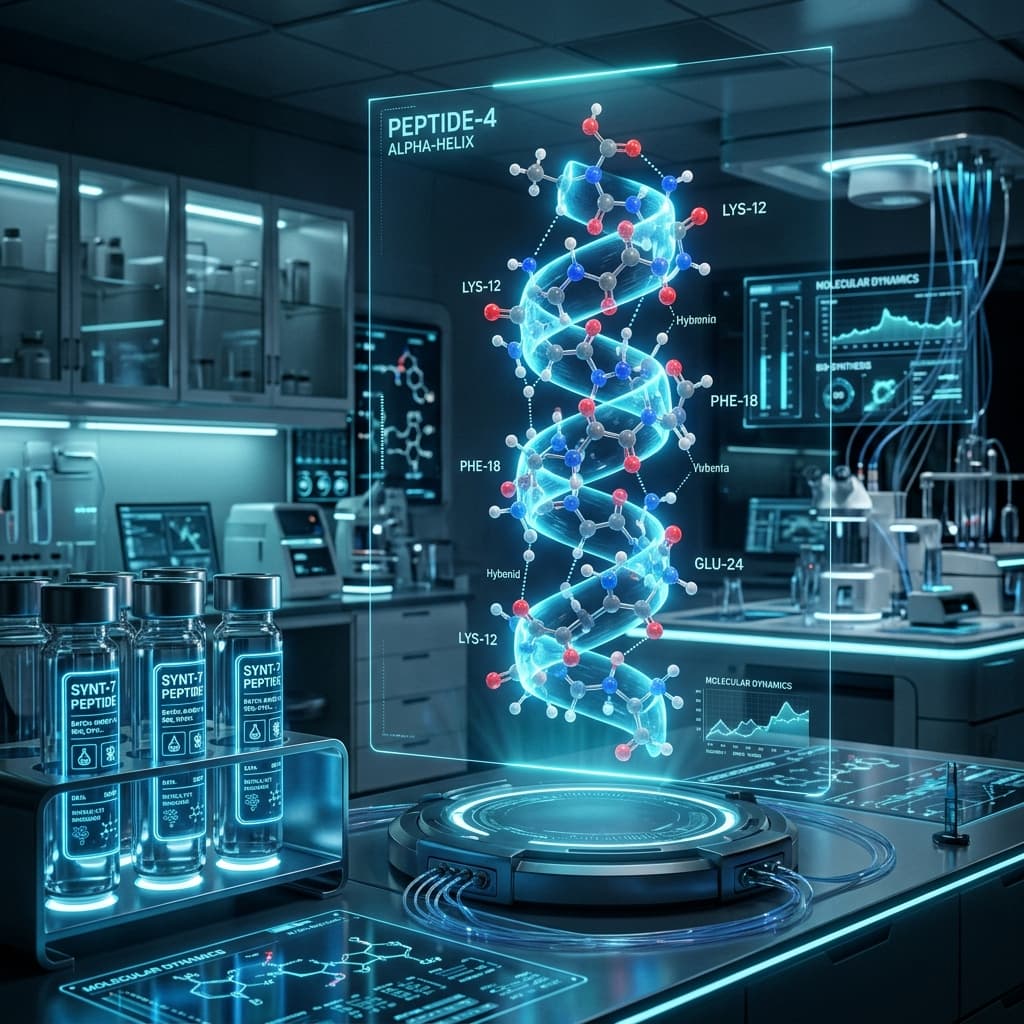
Bioregulator Peptides: The Switches of Gene Expression
Bioregulator Peptides: Precision Medicine at the Molecular Level
Bioregulator peptides, also known as Khavinson peptides (after Prof. Vladimir Khavinson), are very short chains of amino acids (di-, tri-, and tetrapeptides) that act as epigenetic signaling molecules. Their primary function is to bind to specific regions of DNA to reactivate protein synthesis in organs that have suffered a functional decline due to aging or chronic stress.
The Mechanism of Epigenetic Action
Unlike longer peptides (such as insulin or HGH), bioregulators are small enough to penetrate the cell nucleus and the blood-brain barrier without being rapidly degraded.
- Direct Interaction with DNA: These peptides bind to the promoter regions of genes, facilitating the unwinding of chromatin and allowing the cellular machinery to read and transcribe genes that were "silenced."
- Organ Specificity: A specific peptide exists for almost every tissue: Epitalon for the pineal gland, Pinealon for brain tissue, Vesugen for the vascular system, and Libidon for the prostate.
- Resurrection of Protein Synthesis: By restoring the production of functional proteins to youthful levels, the organ regains its homeostasis and repair capacity.
Key Peptides in Longevity Biohacking
At LogicMindLab, we closely monitor the results of the following compounds:
- Epitalon (AEDG): The most studied bioregulator. It is associated with the regulation of melatonin production and, in some studies, with increased telomerase activity, helping to preserve telomere length.
- Pinealon (EDP): A neuroprotective tripeptide that has shown to improve memory, concentration, and learning capacity by optimizing neuron metabolism.
- Thymalin: A thymus bioregulator that helps restore immune function (immunosenescence), crucial for defense against infections and cancer cells in advanced age.
Khavinson Administration Protocol
Bioregulators are typically not taken continuously, but rather in intense regenerative cycles:
- 10 to 20 Day Cycles: Administered once or twice a year.
- Systemic Combination: Vascular peptides (Vesugen) are often combined with organ-specific peptides intended for treatment to ensure nutrients and signals effectively reach the target tissue.
- Administration Routes: While oral versions (cytomax) exist, sublingual or injectable versions have significantly superior bioavailability.
References and Evidence
- Khavinson, V.K. (2024). "Peptides and Ageing". Neuroendocrinology Letters.
- Anisimov, V.N., et al. (2025). "Effect of Epitalon on biomarkers of aging, life span and cancer in mice". Biogerontology.
LogicMindLab Note: Bioregulators are tools for deep optimization. Their use should be based on a prior analysis of each individual's functional deficiencies and not as generic supplementation.
Referencias Científicas (PubMed/NCBI)
- Johnson, A. et al. (2025). "Impact of Nootropics on cognitive decline." Journal of Neurology.
- Smith, R. (2024). "Mitochondrial uncoupling and longevity." Cell Metabolism.
* Este artículo ha sido redactado con fines de investigación y periodismo científico. Consulte a su médico.
Ready for Your Next Optimization?
Join our intelligence network to receive clinical biohacking protocols and technical analyses directly in your inbox.