Carbohydrate Cycling: Insulin Resilience and Metabolic Flexibility
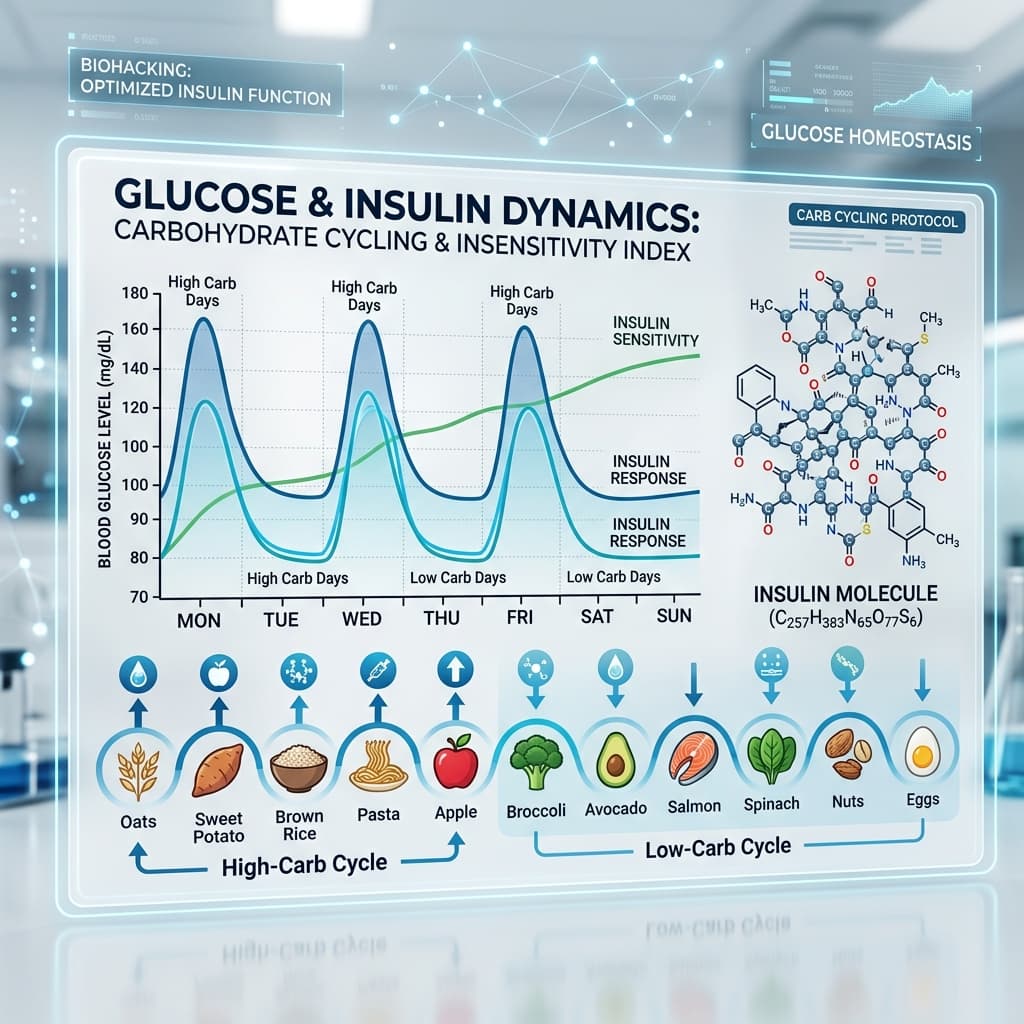
Carbohydrate Cycling: Programming Metabolic Efficiency
The greatest enemy of modern metabolic health is the constant and excessive supply of glucose. Carbohydrate Cycling (Carb Cycling) is not a diet, but a nutritional periodization protocol designed to maximize insulin sensitivity and metabolic flexibility: the body's ability to efficiently switch between burning glucose and burning fats (light ketosis).
The Mechanism: Insulin and Glycogen Management
Insulin is the storage hormone. When its levels are chronically high, fat burning (lipolysis) is blocked.
- Low Carbohydrate Days (Depletion): The goal is to deplete liver and muscle glycogen. In the absence of external glucose, the body increases fat oxidation and increases the expression of GLUT4 transporters, improving insulin sensitivity.
- High Carbohydrate Days (Repletion): These are used to trigger anabolic signaling (mTOR), replenish glycogen, and avoid metabolic slowdown and the drop in thyroid hormones (T3).
- Metabolic Flexibility: Training the body not to depend exclusively on sugar reduces post-prandial fatigue spikes and improves sustained focus.
The LogicMindLab 3-Phase Protocol
- Low-Carb Days (Focus/Endurance Days):
- Carbohydrate intake below 50g.
- Priority: Healthy fats and proteins.
- Ideal for: Deep cognitive work and low-intensity aerobic exercise (Zone 2).
- High-Carb Days (Strength/Power Days):
- Intake of 150g-300g (depending on muscle mass).
- Priority: Complex carbohydrates (tubers, white rice, fruits).
- Ideal for: Explosive strength training or HIIT.
- Maintenance Days: Moderate intake (~100g) to balance the week.
Synchrony with Training
For the biohacker, carbohydrate consumption must be "earned." The largest window of insulin sensitivity occurs in the 2-3 hours following intense exercise. It is at this time that carbohydrates are preferentially directed to the muscle (glycogen repletion) instead of to adipose tissue.
References and Evidence
- Hall, K.D., et al. (2025). "Energy expenditure and body composition changes after an isocaloric ketogenic diet in overweight and obese men". The American Journal of Clinical Nutrition.
- Ludwig, D.S., et al. (2024). "The Carbohydrate-Insulin Model: A Physiological Perspective on the Obesity Pandemic". The American Journal of Clinical Nutrition.
LogicMindLab Note: Carbohydrate cycling is especially effective for women, as it helps prevent alterations in the hypothalamic-pituitary-ovarian axis that can occur with extreme and prolonged ketogenic diets.
Scientific References & Disclaimer
This article was written for scientific journalism and educational purposes based on publicly available clinical literature. Always consult a licensed healthcare professional before modifying your protocols.
Verify on PubMed