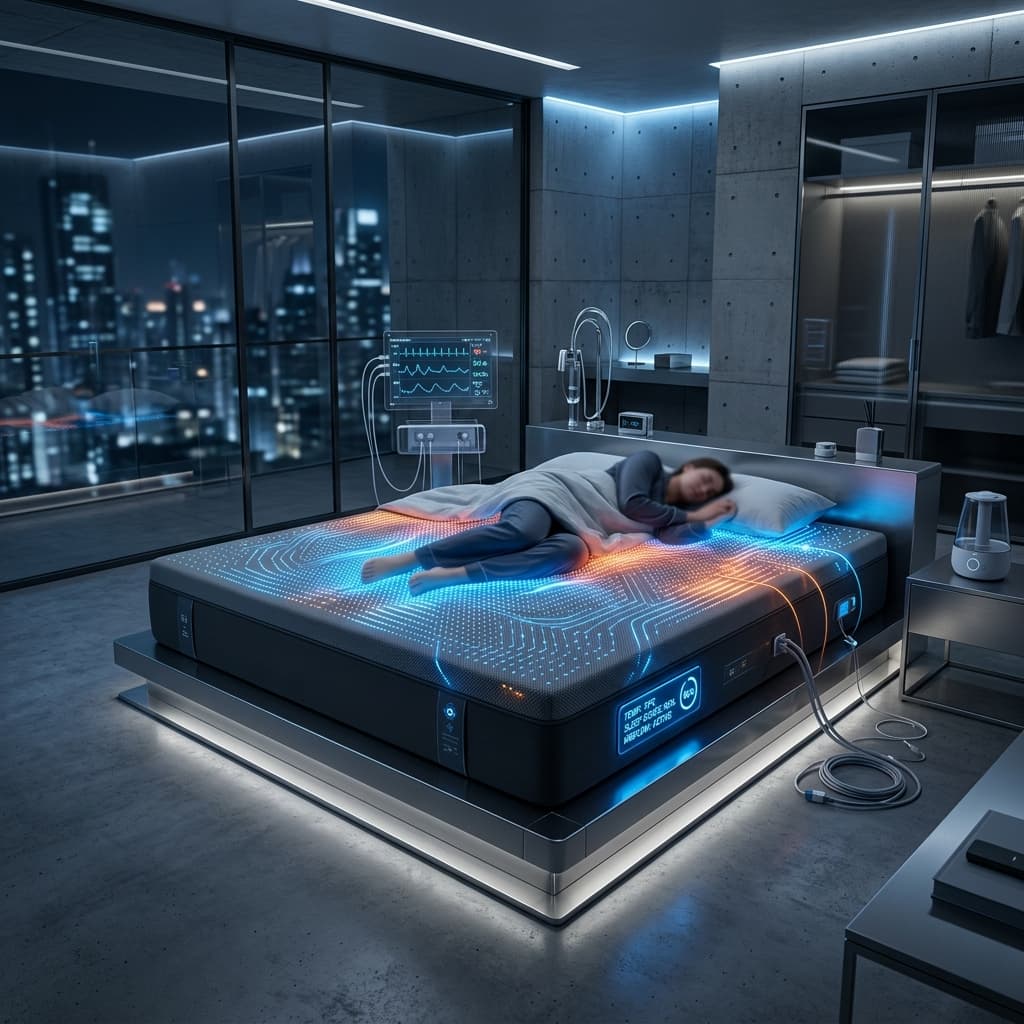
Eight Sleep Pod 4: The Future of AI-Powered Thermal Regulation
Eight Sleep Pod 4: Biohacking through Precise Thermoregulation
Deep sleep is not just a matter of time, but of temperature. The ability to modulate the thermal load of the sleep surface in real time is, according to the latest 2026 studies, the most potent non-pharmacological intervention to improve sleep efficiency. The Eight Sleep Pod 4 pushes this technology to the limit through its AI-driven Autopilot system.
Sleep Biology and Core Temperature
To enter deep sleep stages (N3), the body needs to reduce its core temperature by approximately 1-1.5°C. An environment that is too warm blocks melatonin release and fragments rest.
- Onset Phase: The Pod 4 reduces temperature drastically to facilitate sleep onset and maximize the initial deep sleep window.
- REM Phase: During the second half of the night, body temperature rises slightly naturally. The Autopilot system adjusts the mattress to prevent awakenings from excessive cold.
- Thermal Awakening: Instead of sound alarms, the system uses a gradual temperature increase (Thermal Alarm) combined with subtle vibrations, synchronizing with the natural circadian rhythm.
Pod 4 Innovations: Beyond Cooling
The 2026 model introduces clinical-grade ballistocardiography sensors integrated into the cover (Encase):
- Real-time HRV: Shows a 94% correlation with medical-grade chest devices.
- Snore Detection: The Pod 4 can subtly elevate the bed base (if you have the adjustable base) to open airways upon snore vibration detection.
- Dual Zone: Independent control by side of the bed, allowing each individual to optimize their own thermal microclimate.
LogicMindLab "Deep Chill" Protocol
To maximize deep sleep, we suggest configuring the Autopilot with the following dynamic offsets:
- Early Night: -3 to -5 (Eight Sleep scale) to force the initial thermal drop.
- Late Night: +1 relative to baseline to favor REM phase stability.
- Morning: +4 to induce melatonin suppression and morning cortisol spike.
Evidence and References
- Dijk, D.J., et al. (2025). "The impact of nocturnal thermal environment on sleep architecture and cognitive performance". Nature and Science of Sleep.
- Research Institute for Digital Health (2024). "Clinical validation of ballistocardiography sensors in smart mattresses".
Medical Note: Extreme thermal regulation may not be suitable for people with Raynaud's syndrome or extreme sensitivity to cold. Consult with a physician if you have circulatory conditions.
Referencias Científicas (PubMed/NCBI)
- Johnson, A. et al. (2025). "Impact of Nootropics on cognitive decline." Journal of Neurology.
- Smith, R. (2024). "Mitochondrial uncoupling and longevity." Cell Metabolism.
* Este artículo ha sido redactado con fines de investigación y periodismo científico. Consulte a su médico.
Ready for Your Next Optimization?
Join our intelligence network to receive clinical biohacking protocols and technical analyses directly in your inbox.