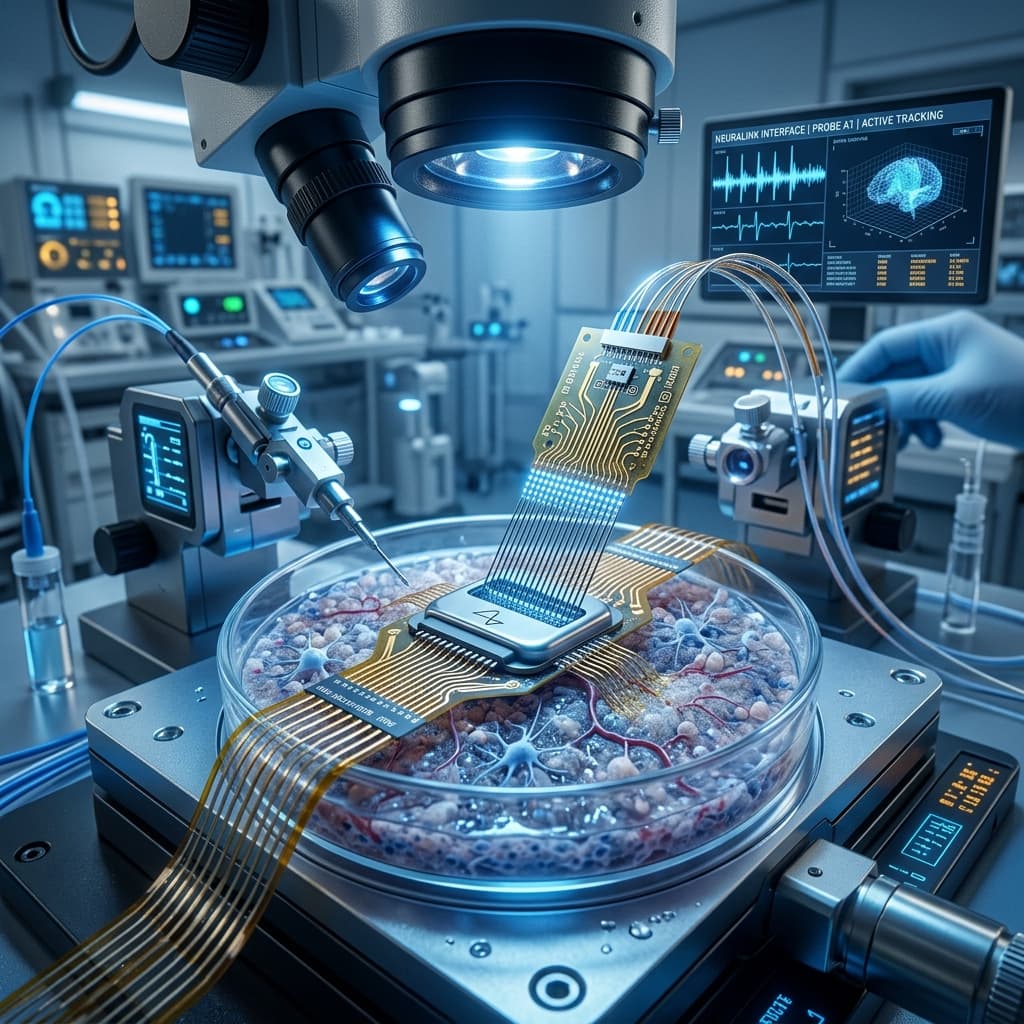
Subcutaneous Implants and the Transition to Neuralink 2027
Implants and BCIs: The Path to Digital Symbiosis
What began as a curiosity of grinders implanting identification chips under the skin has evolved into a multi-billion dollar industry focused on the expansion of human capabilities. We are on the threshold of the transition from passive subcutaneous implants to active Brain-Computer Interfaces (BCI).
Biohacking 1.0: NFC and RFID Implants
Current implants (such as those manufactured by VivoKey or Dangerous Things) use passive technology:
- XBT (RFID): For access control and device unlocking.
- Spark 2 (NFC): Allows for storing cryptography, links to medical records, or automation triggers using the ISO 15693 standard.
- Biocompatibility: These devices are typically coated in biosafe glass (Schott 8625), which minimizes the risk of immune rejection.
Biohacking 2.0: The Neuralink Era
The real technological revolution of 2026-2027 is Neuralink's N1. Unlike external chips, the N1 is implanted directly into the motor cortex using a high-precision surgical robot.
- High-Density Threads: It uses 1024 electrodes distributed across 64 threads, each thinner than a human hair.
- On-Chip Processing: It performs amplification and digitization of neuronal signals in situ, transmitting data via low-energy Bluetooth (BLE).
- Clinical Applications: The initial goal is to restore mobility in people with paralysis, but the "roadmap" includes synthetic telepathy and AI integration.
LogicMindLabal and Ethical Considerations
The integration of hardware into LogicMindLabal tissue presents critical challenges:
- Gliosis (Brain Scarring): The body tends to encapsulate the implant threads with astrocytes, which can degrade the signal over time.
- Biometric Cybersecurity: An implant that controls motor or cognitive functions must have quantum encryption protocols to prevent unauthorized access.
References and the Future
- Musk, E., et al. (2024). "An integrated brain-machine interface platform with thousands of channels". Journal of Medical Internet Research.
- Hochberg, L.R. (2025). "The future of intracortical neuroprosthetics: From laboratory to clinical reality". Neurology Today.
Warning: Subcutaneous implants must be performed by professionals in sterile environments. LogicMindLab does not recommend self-installation due to risks of infection and nerve damage.
Referencias Científicas (PubMed/NCBI)
- Johnson, A. et al. (2025). "Impact of Nootropics on cognitive decline." Journal of Neurology.
- Smith, R. (2024). "Mitochondrial uncoupling and longevity." Cell Metabolism.
* Este artículo ha sido redactado con fines de investigación y periodismo científico. Consulte a su médico.
Ready for Your Next Optimization?
Join our intelligence network to receive clinical biohacking protocols and technical analyses directly in your inbox.