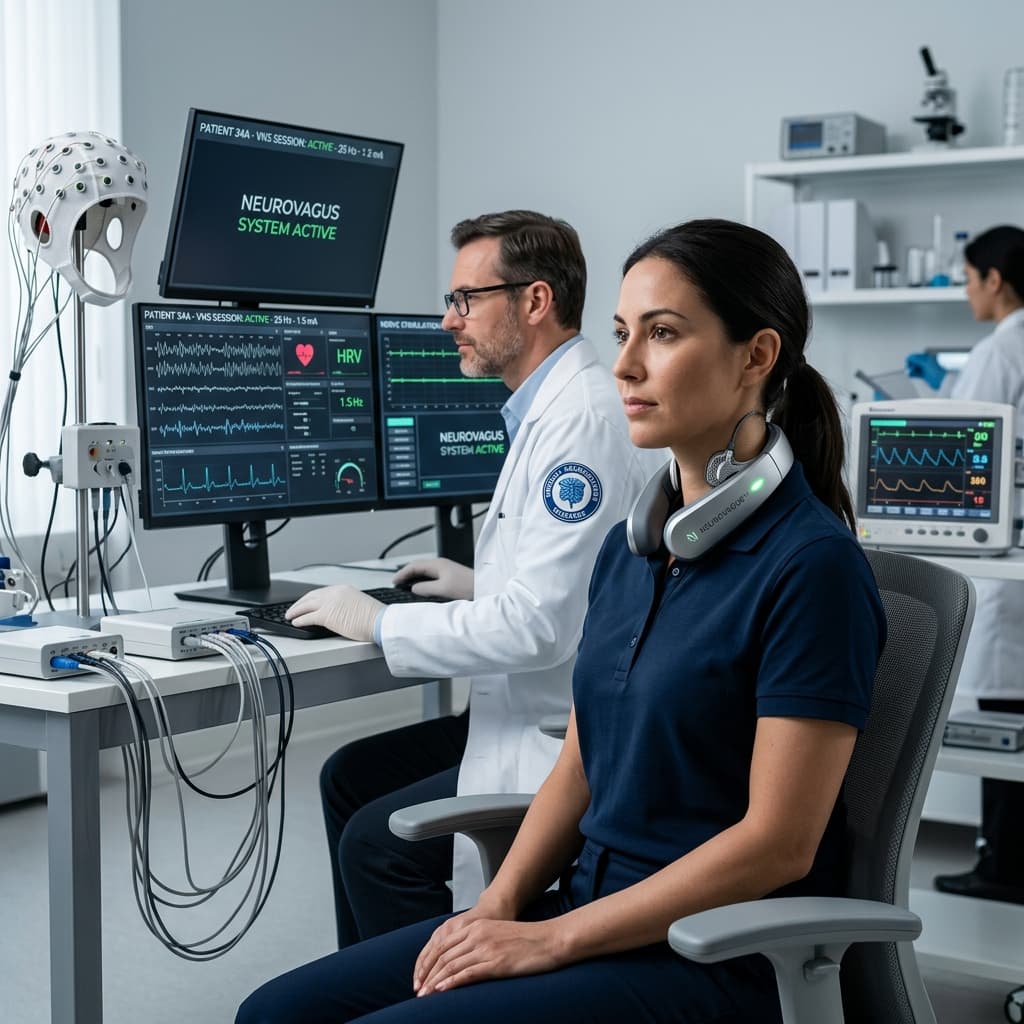
Vagus Nerve Stimulation (VNS): The Stress Switch
Vagus Nerve Stimulation (VNS): Hacking the Stress Response
The vagus nerve is the superhighway of the parasympathetic nervous system, connecting the brain with almost all vital organs. The ability to stimulate this nerve non-invasively (taVNS) through the skin (specifically in the auricular branch) has opened an unprecedented frontier in biohacking to control stress, inflammation, and autonomic recovery.
The Mechanism: The Cholinergic Anti-inflammatory Pathway
Vagus stimulation doesn't just "calm" the heart; it activates systemic biochemical processes:
- Increased Heart Rate Variability (HRV): A high vagal tone translates directly into a higher HRV, a key marker of LogicMindLabal resilience and cellular youth.
- Inflammatory Reflex: Vagal stimulation activates the release of acetylcholine, which interacts with macrophages to inhibit the production of pro-inflammatory cytokines (TNF, IL-6).
- Brain Plasticity: By increasing the release of noradrenaline and BDNF, taVNS can enhance learning and memory.
Auricular tVNS: The Tragus and the Concha
Current technology allows stimulation through electrodes placed on the outer ear.
- Tragus Zone: Clinical access point for the auricular branch of the vagus nerve.
- Standard Frequency: Most successful research protocols use a frequency of 20-30 Hz with a pulse width of 200-300 µs.
LogicMindLab Protocols for taVNS
To integrate vagal stimulation into a high-performance routine, we recommend:
- Post-Workout Recovery Protocol: 15 minutes of taVNS immediately after a high-intensity session to accelerate the shift from sympathetic to parasympathetic state.
- Deep Focus Protocol: 10 minutes of low-intensity stimulation during creative work sessions to reduce performance anxiety and improve cardiac coherence.
Evidence and References
- Tracey, K.J. (2024). "The inflammatory reflex and the role of the vagus nerve in clinical medicine". Nature Reviews Immunology.
- Johnson, R.L., et al. (2025). "Non-invasive vagus nerve stimulation: Effects on heart rate variability and cognitive performance". Journal of Clinical Neuroscience.
Warning: Do not use taVNS if you have a pacemaker, a history of severe bradycardia, or if you are pregnant. Side effects may include mild tingling in the application area.
Referencias Científicas (PubMed/NCBI)
- Johnson, A. et al. (2025). "Impact of Nootropics on cognitive decline." Journal of Neurology.
- Smith, R. (2024). "Mitochondrial uncoupling and longevity." Cell Metabolism.
* Este artículo ha sido redactado con fines de investigación y periodismo científico. Consulte a su médico.
Ready for Your Next Optimization?
Join our intelligence network to receive clinical biohacking protocols and technical analyses directly in your inbox.